
Drive Measurable Results through Supplier Performance
Effective supplier performance management begins with setting clear, shared expectations. It is sustained through continuous engagement and strengthened by data-driven insight into what matters most. By embedding these practices, you can reduce risk, enhance outcomes, and unlock greater value from every supplier relationship.

Drive Measurable Results Through Supplier Performance
Effective supplier performance management begins with setting clear, shared expectations. It is sustained through continuous engagement and strengthened by data-driven insight into what matters most. By embedding these practices, you can reduce risk, enhance outcomes, and unlock greater value from every supplier relationship.
How to build a stronger foundation for Supplier Performance
Traditional scorecards and compliance checks only scratch the surface. To drive meaningful business outcomes, supplier performance management must go deeper — focusing on clarity of expectations, consistency of measurement, and true collaboration. These three pillars form the foundation for transforming supplier relationships into strategic assets that deliver long-term business value.
Set shared goals that drive success
When teams and suppliers each have their own interpretation of what good looks like, performance becomes difficult to improve.
Aligning around clearly defined, shared performance indicators, like cost, quality, service, risk, and innovation, creates a unified foundation for accountability, trust, and long-term value.

Understand your supplier’s perspective
Performance isn’t just about what you expect from suppliers, it’s equally shaped by how they experience working with you.
Gathering structured feedback helps uncover points of misalignment, rebuild trust, and identify internal processes that may be limiting performance.
Make supplier performance visible
When insights are buried in spreadsheets or siloed systems, it’s hard to drive real improvement.
SRM software allows you to view all your supplier data in one connected system. Centralising performance tracking helps you spot trends, surface risks, and act before they escalate.
Traditional scorecards and compliance checks only scratch the surface. To drive meaningful business outcomes, supplier performance management must go deeper — focusing on clarity of expectations, consistency of measurement, and true collaboration. These three pillars form the foundation for transforming supplier relationships into strategic assets that deliver long-term business value.
How to Build a Stronger Foundation for Supplier Performance
Set shared goals that drive success
When teams and suppliers each have their own interpretation of what good looks like, performance becomes difficult to improve.
Aligning around clearly defined, shared performance indicators, like cost, quality, service, risk, and innovation, creates a unified foundation for accountability, trust, and long-term value.
Understand Your Supplier’s Perspective
Performance isn’t just about what you expect from suppliers, it’s equally shaped by how they experience working with you.
Gathering structured feedback helps uncover points of misalignment, rebuild trust, and identify internal processes that may be limiting performance.
Make supplier performance visible
When insights are buried in spreadsheets or siloed systems, it’s hard to drive real improvement.
SRM software allows you to view all your supplier data in one connected system. Centralising performance tracking helps you spot trends, surface risks, and act before they escalate.
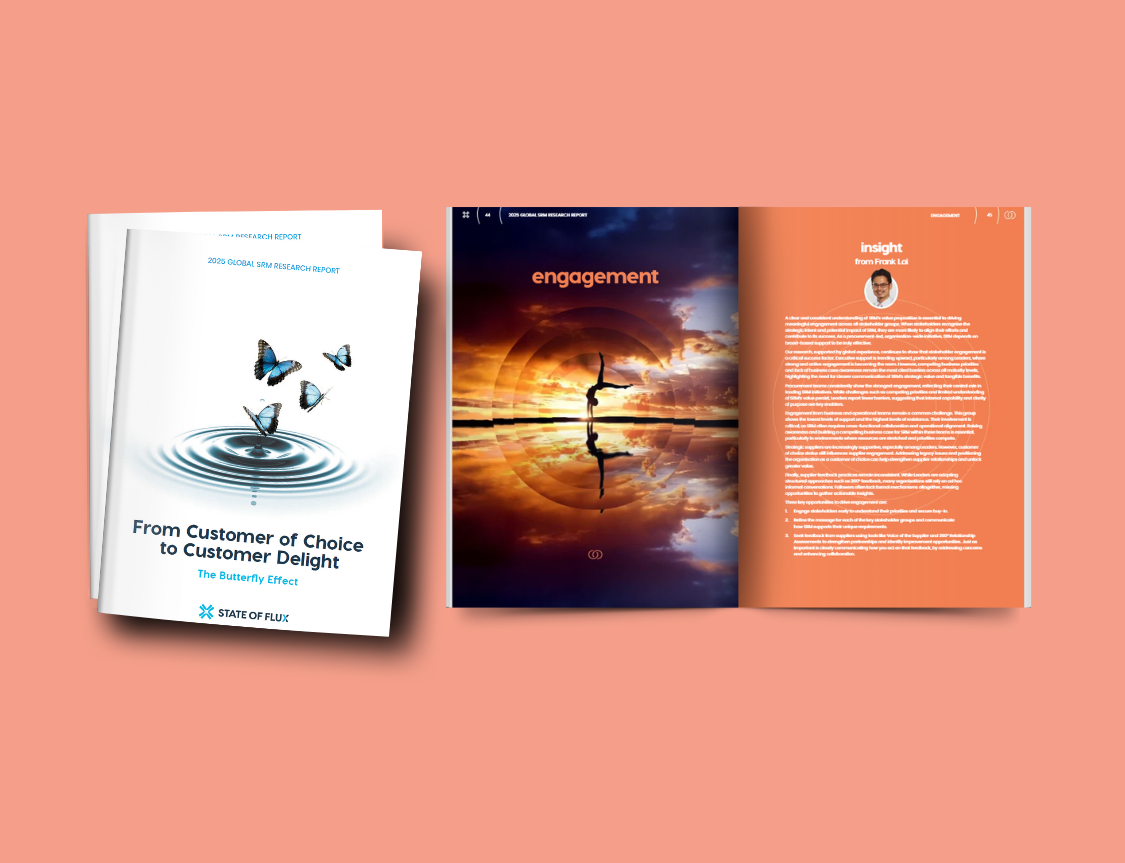
See How Supplier Engagement Shapes Customer Experience
Global SRM Research Report
The 2025 SRM report, “From Customer of Choice to Customer Delight” reveals how supplier engagement goes beyond operational performance, it directly influences the end customer experience. In the Engagement section, we uncover how leading organisations are building trust, improving collaboration, and creating supplier partnerships that deliver measurable value to customers.
Featuring fresh insights and case studies from global brands such as AIrCanada, Vodafone, Auckland Transport, U.S. Steel, Currys the report demonstrates how engaged suppliers drive responsiveness, innovation, and alignment, not just with business goals, but with customer expectations.
Discover what’s working and where most organisations still fall short in turning supplier relationships into customer success.
Our approach to smarter Performance Management
Better supplier performance doesn’t come from more reporting, it comes from stronger alignment, governance, and engagement. Our approach helps you build and embed the structures and behaviours needed to turn data into real outcomes.
-
Before performance can be improved, it must be clearly understood, you need a clear picture of how it’s measured, governed, and experienced today, both internally and externally. Start by benchmarking your current SRM capability to identify gaps and prioritise areas for impact.
-
Performance is a two-way street. One-sided monitoring can damage trust and limit engagement. Using a Voice of the Supplier, you can uncover friction points, blind spots, and misaligned expectations. This feedback creates a foundation for co-creating improvement plans that unlock mutual value.
-
When goals are vague or inconsistent across teams, performance expectations break down. Through joint business planning, you can establish shared KPIs across cost, service, risk, ESG, and innovation—tied directly to strategic business outcomes.
-
Ad hoc reviews and static scorecards rarely deliver long-term improvement. Instead building structured review cycles and governance models, you create a consistent rhythm for accountability and continuous improvement across functions and supplier tiers. Contact us.
-
Tracking data is only the first step. Acting on it is where performance improves. With SupplierBase, our performance and relationship management platform you gain real-time visibility in supplier performance and early warning signals to support faster, more confident decision-making.
Contact us for a free consultation about your current challenges.

Contracts set the foundation for managing performance
It’s hard to manage what isn’t clearly defined. Supplier performance depends on having well-structured contracts that set expectations, outline service levels, and align on outcomes from the start.
That’s why contract management and performance management must work in lockstep. When contracts are accessible, actively managed, and embedded into supplier performance frameworks, they become powerful tools for driving accountability, tracking progress, and enabling course correction when needed.
At State of Flux, we help you connect contract terms with supplier goals, ensuring agreements are not just signed, but lived and that they deliver measurable results for both parties.

Explore Performance Management in practice
Take a deeper look at how leading organisations are improving supplier outcomes through practical strategies, real-world case studies, and expert insight.




-
It starts with setting shared objectives that go beyond operational metrics. When suppliers clearly understand how their performance supports your business goals — including growth, innovation, and resilience — they are more likely to invest, commit, and deliver results that matter.
-
Too often, performance expectations are vague or assumed. Agreeing on KPIs across cost, service, risk, ESG, and innovation creates mutual accountability and reinforces the value of collaboration.
-
Traditional scorecards are a starting point, but they must evolve. A balanced performance framework includes ESG, innovation, and strategic value creates a more complete picture. As a starting point, benchmark your supplier management to discover performance gaps and drive improvement.
-
One-sided reviews erode trust and discourage openness. The most successful organisations co-create improvement plans with suppliers, identifying root causes, aligning priorities, and working collaboratively toward measurable outcomes. Understand how your supplier feels about working with your business to set the foundation to become their customer of choice.
-
Real-time dashboards and structured data capture allow you to spot trends, monitor sub-tier risks, and act on issues before they escalate. Supplier management software enables that.
-
Accountability works best when it’s grounded in fairness and transparency. Trust grows when suppliers know performance discussions are structured, data informed, consistent, and focused on shared outcomes. The key to gaining your suppliers' trust is understanding their perspective.
-
Effective governance is not about control, it is about creating clarity and consistency. Structured review cycles, defined roles, escalation pathways, and regular cross-functional engagement turn meetings into strategic conversations that drive performance forward. We help you design these frameworks through our Supplier Management Handbook: Contact us
-
Supplier management software moves performance management beyond static reports and manual scorecards. Supplier management platforms, such as SupplierBase, offer real-time performance tracking across multiple dimensions — including cost, quality, risk, innovation, and ESG — giving you the insight to make faster, smarter decisions and continuously improve supplier outcomes.