
Strengthen Cost Management Through Supplier Collaboration
Smarter cost management starts with stronger supplier collaboration, helping you increase efficiency, protect value, and achieve sustainable savings.

Strengthen Cost Management Through Supplier Collaboration
Smarter cost management starts with stronger supplier collaboration — helping you increase efficiency, protect value, and achieve sustainable savings.
Move beyond traditional cost cutting
Many cost strategies focus on price but overlook the structural issues that drive inefficiency. Smarter cost management starts by looking beneath the surface, at how you engage suppliers, how capable your teams are, and how resilient your cost strategies are when disruption hits. These are the three most important areas to focus on when embedding cost discipline without compromising value.


Standardise supplier engagement
Supplier collaboration often varies between teams, categories, or regions, leading to inefficiency and missed value.
Establishing a clear, repeatable model for engagement across functions makes supplier collaboration scalable, measurable, and easier to improve over time.

Strengthen commercial capability
Negotiating price is only one part of managing cost. Real savings come from conversations that challenge assumptions, uncover hidden costs, and explore opportunities for improvement.
Building commercial capability within teams makes this kind of dialogue more confident and consistent.
Build resilience into cost decisions
Short-term savings can quickly unravel when suppliers fail, disruptions hit, or compliance risks escalate.
Embedding resilience into cost management means factoring in risk visibility, supplier dependencies, and contingency plans so cost strategies are built to last.
Many cost strategies focus on price but overlook the structural issues that drive inefficiency. Smarter cost management starts by looking beneath the surface — at how you engage suppliers, how capable your teams are, and how resilient your cost strategies are when disruption hits. These are the three most important areas to focus on when embedding cost discipline without compromising value.
Move Beyond Traditional Cost Cutting
Standardise supplier engagement
Supplier collaboration often varies between teams, categories, or regions - leading to inefficiency and missed value.
Establishing a clear, repeatable model for engagement across functions makes supplier collaboration scalable, measurable, and easier to improve over time.
Strengthen commercial capability
Negotiating price is only one part of managing cost. Real savings come from conversations that challenge assumptions, uncover hidden costs, and explore opportunities for improvement.
Building commercial capability within teams makes this kind of dialogue more confident and consistent.
Build resilience into cost decisions
Short-term savings can quickly unravel when suppliers fail, disruptions hit, or compliance risks escalate.
Embedding resilience into cost management means factoring in risk visibility, supplier dependencies, and contingency plans so cost strategies are built to last.
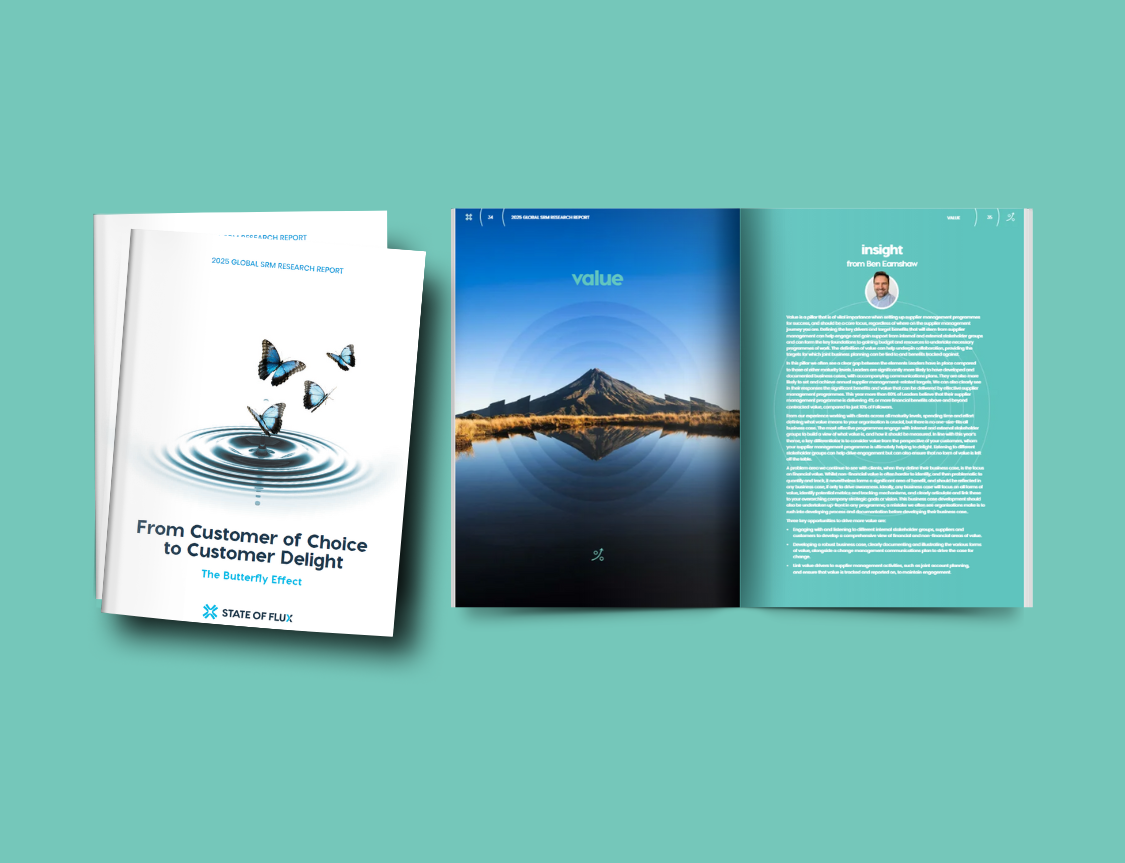
Exclusive insights from 335+ organisations shaping supplier management best practice.
Global SRM Research Report
Now in its 17th year, the Global SRM Research Report remains the most comprehensive study of supplier management worldwide. This year’s edition explores how supplier relationships shape customer experience, and why leading organisations are reframing SRM as an enterprise-wide capability rather than a procurement exercise.
The report examines the shift from being a customer of choice to achieving true customer delight, supported by insights on trust, loyalty, governance, capability building and the role of senior leadership. With findings from 484 respondents across 335 organisations, plus case studies from Aon, Air Canada, Vodafone, Currys and more, it offers practical guidance for teams looking to strengthen performance, resilience and innovation through their extended enterprise.
Our Approach to smarter cost management
We believe sustainable cost outcomes come from structure, not shortcuts. Our approach focuses on building the internal capability, supplier engagement, and visibility required to manage cost effectively without compromising long-term value or resilience.

-
Effective cost management starts with knowing where to focus. By segmenting your suppliers based on spend, risk, and strategic value, you can apply the right level of engagement to the right relationships. This is often underpinned by category management and informed by strategic sourcing insights such as spend analysis.
-
Cost targets are more sustainable when they’re shared. Through joint business planning, we help align your internal goals with supplier objectives, creating a roadmap that covers not just cost, but also performance, risk, and continuity. A strong value proposition makes collaboration more compelling.
-
Supplier engagement often varies by team or region. We introduce structured ways of working, through governance frameworks, templates, and support tools, to make collaboration repeatable and measurable across the business.
Contact us for a free consultation about your challenges.
-
Your team’s ability to lead supplier conversations matters as much as your pricing strategy. We provide tailored training and diagnostic assessments to build the commercial confidence and negotiation consistency needed to engage suppliers effectively, influence outcomes, and sustain value over time.
-
Short-term savings shouldn’t expose you to long-term risk. We help identify supplier vulnerabilities and co-develop mitigation plans, connecting cost management with supply chain resilience.

Lessons from the Covid-19 period
The pandemic exposed just how interconnected and fragile global supply chains are. Organisations that had visibility and strong relationships across their extended enterprise were better positioned to respond, adapt, and minimise disruption. Those without clear supplier visibility, robust collaboration, and joint contingency planning faced greater operational, financial, and reputational risks.
To minimise the risk and cost of failure, organisations must:
Identify and map critical suppliers and sub-tier dependencies
Build deeper supplier relationships based on trust and transparency
Collaborate on joint risk mitigation and contingency planning
Actively monitor supplier performance, capacity, and financial health

Explore Cost Management in practice
Take a deeper look at how strategic supplier collaboration can deliver better cost outcomes through real-world experience and expert insight.



-
Procurement leaders are under pressure to manage costs more effectively while navigating risk, delivering resilience, and meeting broader business objectives. Yet traditional levers like retendering or rate renegotiation can only go so far. The organisations seeing real impact are those that treat cost management as a strategic capability, embedded across the supplier lifecycle.
-
It starts with recognising that cost is not isolated. It’s shaped by how you collaborate with suppliers, how consistently teams engage, and how well you connect operational decisions to commercial outcomes. Our research-backed methodology combines supplier collaboration, governance, and performance management to reduce total cost of ownership—without compromising supplier relationships or long-term value. Through consulting, training, and our supplier management software platform, we help you turn cost efficiency into a competitive strength.
-
Sustainable value creation starts when procurement is embedded in long-term business planning—not just short-term price negotiations. This means aligning category strategies with business goals and supplier capabilities. Approaches like strategic sourcing and joint business planning help identify where collaboration can unlock innovation, reduce risk, and improve cost over time. It also helps to understand how your suppliers view you, conducting a Voice of the Supplier assessment is often a strong starting point.
-
Many efficiency opportunities sit outside of traditional contract terms in areas like process alignment, waste reduction, and innovation. Collaboration is most effective when suppliers are engaged early and consistently, particularly with high-priority categories. Segmenting your suppliers and co-developing a joint business plan with strategic partners can help uncover these hidden areas of value.
-
Digital tools can integrate supplier data across performance metrics, risk indicators, and financials into one view, enabling better decision-making. With the right supplier management software, procurement leaders can track cost drivers, monitor supplier risk, and flag potential issues before they escalate. When embedded into daily workflows, this visibility becomes a core part of operational resilience.
-
Technical procurement skills are only part of the equation. Effective supplier engagement also requires relationship management, commercial awareness, and the ability to lead collaborative conversations. Investing in training that builds these capabilities alongside traditional negotiation skills can help shift behaviours across the team and create consistency in how suppliers are engaged.
-
Collaboration often breaks down when there’s no shared model or governance. Establishing a structured supplier engagement framework, with clear roles, escalation paths, and mutual review points, ensures that collaboration isn’t dependent on individuals. Embedding this through a mix of software and training can help scale supplier engagement practices across categories and teams.
-
Risk isn’t just a procurement issue it’s a business-wide challenge. Proactive risk management means understanding your critical suppliers, mapping dependencies, and building contingency plans together. Using a combination of category management, supplier segmentation, and digital tools to monitor risk can give early warning signs. Many organisations also integrate risk mapping into their strategic sourcing and supplier planning processes.
Contact us for a free consultation about your current challenges.