
Turning Supplier Management into Business Advantage
Start now by benchmarking your supplier management against global leaders to identify your strengths and opportunities.

Turning Supplier Management into Business Advantage
Benchmark your supplier management against global best practice to identify the strengths and opportunities in your operations.
Unlock competitive advantage through supplier relationships

Maximising value and performance from your suppliers.
Done well, effective supplier management generates a huge array of benefits for organisations, and leaders in the field are reaping these rewards. But even for them there is so much more to do, and for followers, and those that have barely begun, there are multiple further gains to be won.
The challenge for many procurement and supply teams is that some of these advantages are easier to spot and quantify than others.
What does best practice in Supplier Management look like?
Best-in-class supplier management applies a structured, research-backed approach to managing suppliers as strategic partners. Our best practices in supplier management are built on 17 years of global SRM research, with 335+ organisations participating each year. These insights enable procurement leaders to strengthen partnerships, manage risk, improve resilience, and unlock supplier-led innovation. State of Flux supports global organisations through supplier management consulting, technology, training, and SRM research.

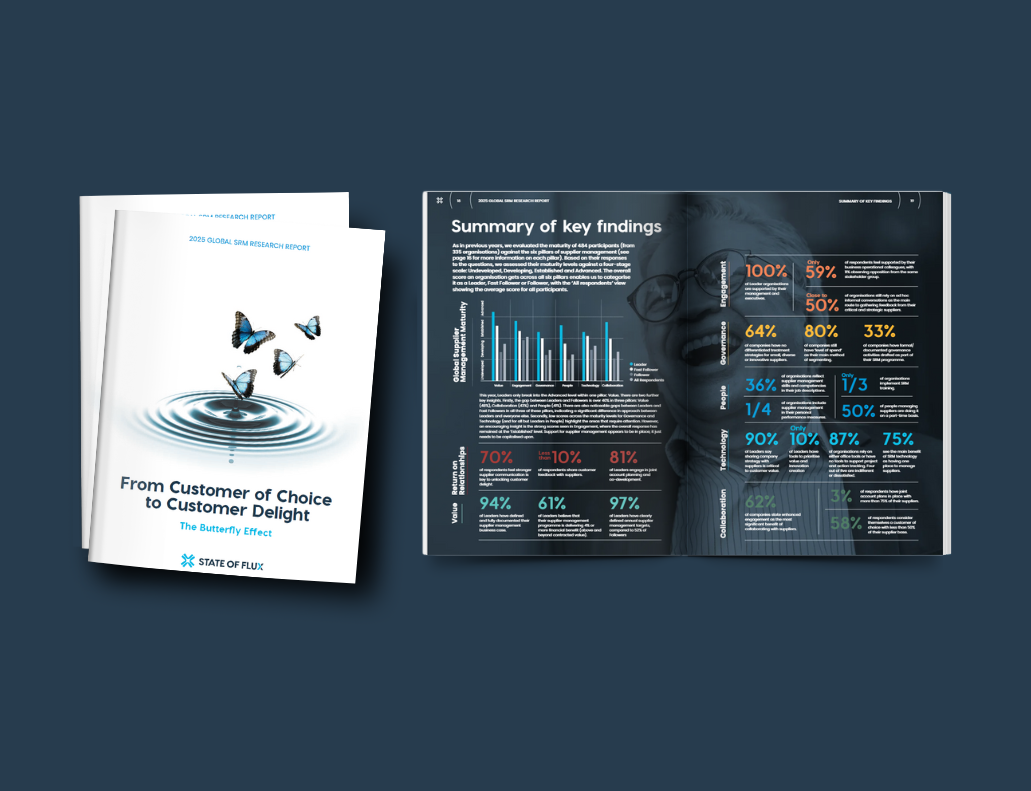
Exclusive insights from 335+ organisations shaping supplier management best practice.
Global SRM Research Report
Now in its 17th year, the Global SRM Research Report remains the most comprehensive study of supplier management worldwide. This year’s edition explores how supplier relationships shape customer experience, and why leading organisations are reframing SRM as an enterprise-wide capability rather than a procurement exercise.
The report examines the shift from being a customer of choice to achieving true customer delight, supported by insights on trust, loyalty, governance, capability building and the role of senior leadership. With findings from 484 respondents across 335 organisations, plus case studies from Aon, Air Canada, Vodafone, Currys and more, it offers practical guidance for teams looking to strengthen performance, resilience and innovation through their extended enterprise.
Exclusive insights from 300+ organisations shaping supplier management best practice.
Global SRM Research Report
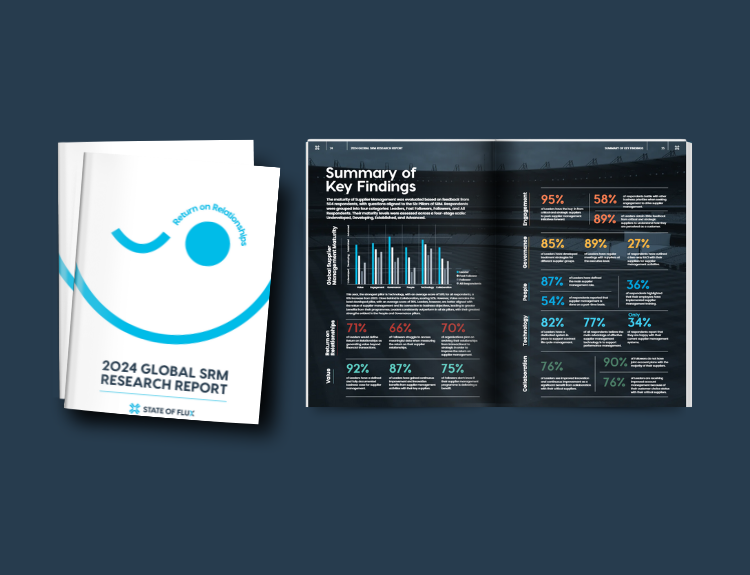
Now in its 17th year, the State of Flux SRM Research is the most comprehensive global study on supplier relationship management (SRM). Each year, over 300 organisations and 500 procurement leaders contribute to benchmark supplier management maturity, share best practices, and identify emerging trends across the six pillars of supplier management.
The 2024 report explores how leading organisations move beyond cost to unlock the full Return on Relationships (RoR) - capturing value through risk management, supply chain resilience, innovation, sustainability, and supplier collaboration. The report includes exclusive thought-leadership articles and case studies from Microsoft, Cancer Research UK, INEOS, Starbucks, Westpac and others.
Six pillars of SRM
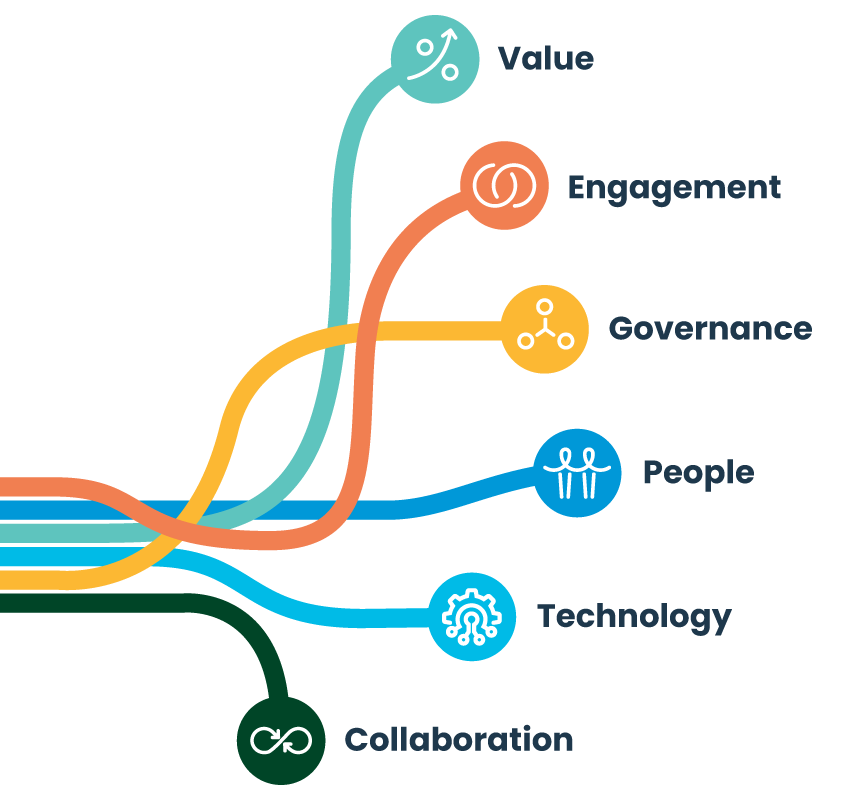
‘The Six Pillars of SRM’ is our best practice model that defines the key elements for building a successful supplier management programme. These elements are: Value; Engagement; Governance; People; Technology and Collaboration.
-
Gaining a clear understanding of what value means for the business is crucial. Value articulated as part of a value proposition or business case must align to the organisation’s strategic objectives and to the challenges it faces. Value needs to be defined in the broadest possible sense and be extended beyond cost to encompass improved performance, reduced risk, supply chain resilience and innovation. This pillar links strongly to Engagement as it will help create buy in and support, and to governance where tracking and reporting of value needs to be established.
-
Obtaining strong and active support across three key groups of stakeholders is vital to ensuring supplier management programmes have the best chance of achieving success. The first group of stakeholders are executives and senior managers, who provide direction, role-model behaviours and access to resources and budgets. The second group are operational and wider business stakeholders who regularly interact with strategic suppliers. The final group are suppliers themselves. This pillar relies heavily on Value as the basis on which engagement and support can be established.
-
Activities defined under the Governance pillar are the foundation on which effective supplier management programmes are built. Within the scope of this pillar are the processes to undertake the segmentation of suppliers, alignment of appropriate treatment strategies, processes to manage contracts, performance, risk, relationship development and value tracking. In addition, this is where the meeting structures and roles and responsibilities for supplier management are established. This pillar links strongly to Value, as it enables value to be tracked and reported and also to People where it informs the development of role profiles.
-
It’s crucial to have the right skills and competencies within the team delivering supplier management. This pillar provides a framework for people development that encompasses the definition of roles, identification of requisite skills and competencies along with their assessment. In addition, it looks at the provision of training and positioning of supplier management goals and objectives in personal development plans. This pillar’s strongest link is to Governance, from where it draws the activities that need to be incorporated into role profiles. It also draws on Collaboration to reflect the behaviours necessary to collaborate with suppliers and internal stakeholders.
-
Harnessing the power of technology is vital to making supplier management a consistent and sustainable activity. Technology enables supplier management processes and practices to be optimised along with the ability to manage information and automate reporting. This allows practitioners to spend more time engaging suppliers and the business to drive value from relationships. The Technology pillar clearly links strongly to Governance as it is a key enabler for many of the processes defined. It also supports Collaboration in that it creates a shared workspace to collaborate with suppliers and internal stakeholders.
-
Requiring a combination of processes and behaviours, Collaboration is the basis on which supplier management will not only deliver contractual obligations and anticipated value, but will also unlock the potential to deliver value that goes beyond existing contracts. This pillar explores both value release initiatives and the development of open and transparent relationships. It links most closely to the Value pillar, proving the value on which the collaboration should focus, and the People pillar, to identify and develop the skills and behaviours necessary to make it successful.
Six pillars of SRM
‘The Six Pillars of SRM’ is a best practice model that defines the key elements for building a successful supplier management programme. These elements are: Value; Engagement; Governance; People; Technology and Collaboration.
-
Gaining a clear understanding of what value means for the business is crucial. Value articulated as part of a value proposition or business case must align to the organisation’s strategic objectives and to the challenges it faces. Value needs to be defined in the broadest possible sense and be extended beyond cost to encompass improved performance, reduced risk, supply chain resilience and innovation. This pillar links strongly to Engagement as it will help create buy in and support, and to governance where tracking and reporting of value needs to be established.
-
Obtaining strong and active support across three key groups of stakeholders is vital to ensuring supplier management programmes have the best chance of achieving success. The first group of stakeholders are executives and senior managers, who provide direction, role-model behaviours and access to resources and budgets. The second group are operational and wider business stakeholders who regularly interact with strategic suppliers. The final group are suppliers themselves. This pillar relies heavily on Value as the basis on which engagement and support can be established.
-
Activities defined under the Governance pillar are the foundation on which effective supplier management programmes are built. Within the scope of this pillar are the processes to undertake the segmentation of suppliers, alignment of appropriate treatment strategies, processes to manage contracts, performance, risk, relationship development and value tracking. In addition, this is where the meeting structures and roles and responsibilities for supplier management are established. This pillar links strongly to Value, as it enables value to be tracked and reported and also to People where it informs the development of role profiles.
-
It’s crucial to have the right skills and competencies within the team delivering supplier management. This pillar provides a framework for people development that encompasses the definition of roles, identification of requisite skills and competencies along with their assessment. In addition, it looks at the provision of training and positioning of supplier management goals and objectives in personal development plans. This pillar’s strongest link is to Governance, from where it draws the activities that need to be incorporated into role profiles. It also draws on Collaboration to reflect the behaviours necessary to collaborate with suppliers and internal stakeholders.
-
Harnessing the power of technology is vital to making supplier management a consistent and sustainable activity. Technology enables supplier management processes and practices to be optimised along with the ability to manage information and automate reporting. This allows practitioners to spend more time engaging suppliers and the business to drive value from relationships. The Technology pillar clearly links strongly to Governance as it is a key enabler for many of the processes defined. It also supports Collaboration in that it creates a shared workspace to collaborate with suppliers and internal stakeholders.
-
Requiring a combination of processes and behaviours, Collaboration is the basis on which supplier management will not only deliver contractual obligations and anticipated value, but will also unlock the potential to deliver value that goes beyond existing contracts. This pillar explores both value release initiatives and the development of open and transparent relationships. It links most closely to the Value pillar, proving the value on which the collaboration should focus, and the People pillar, to identify and develop the skills and behaviours necessary to make it successful.
Supplier Management best practice
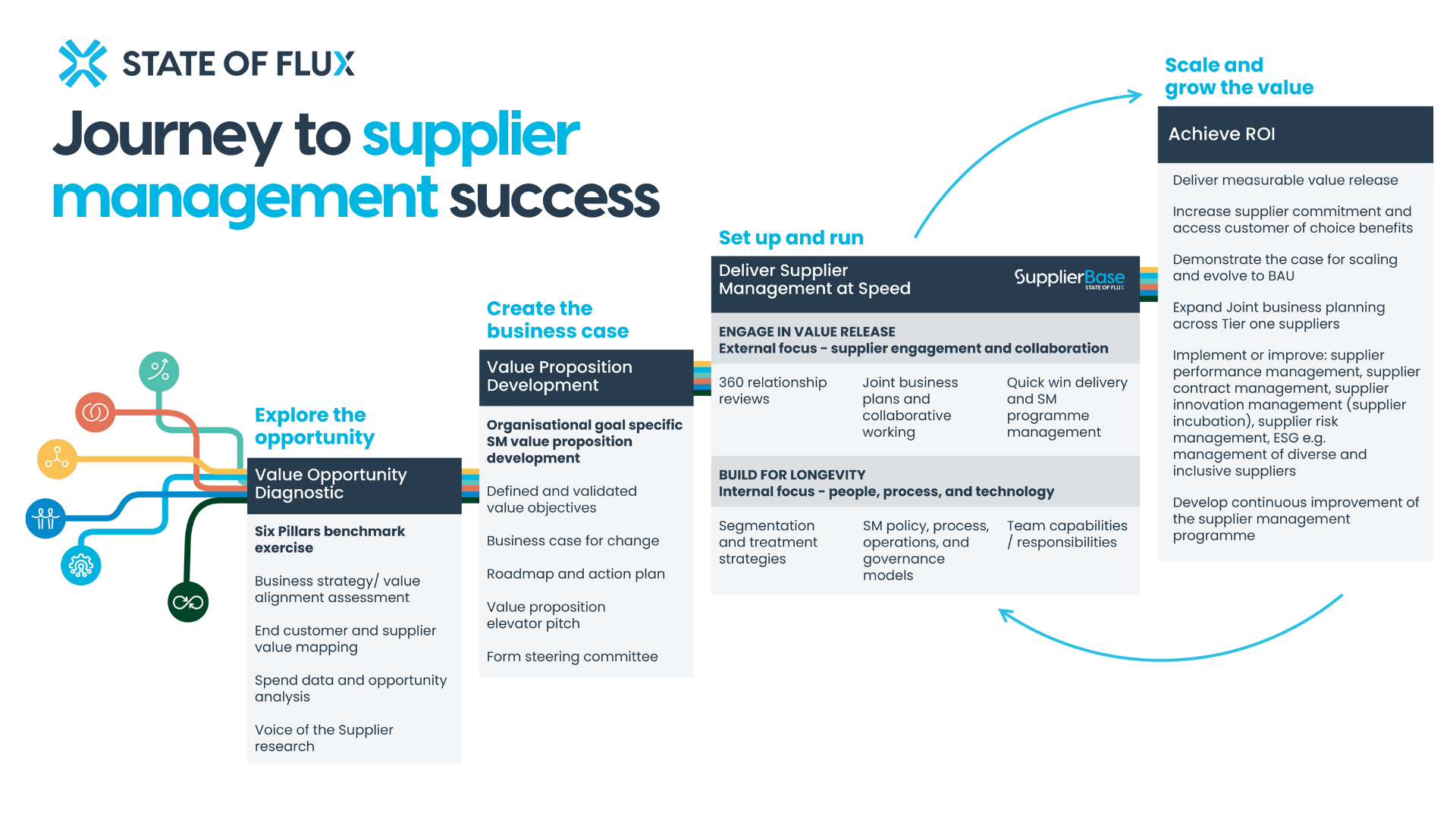
Our supplier management framework provides a clear roadmap for building and scaling a successful supplier management function. It covers every stage - from benchmarking maturity and supplier perception, to value proposition and business case development, supplier segmentation, joint business planning, contract management, performance and risk management, supplier innovation, implementing technology, and developing the skills to deliver more supplier value.
This structured approach enables organisations to strengthen supplier relationships, accelerate value, and achieve customer of choice benefits. Based on over 17 years of global SRM research, it provides a practical pathway to unlock the full potential of supplier management.

Link suppliers to revenue
Suppliers play a critical role in shaping the end customer experience, from product availability and quality to delivery speed and service outcomes. However, their impact is often unmeasured, meaning their importance is undervalued.
End-customer journey mapping overlays supplier touchpoints across the customer lifecycle, showing exactly where performance influences customer satisfaction, loyalty, and revenue.
This insight gives you the evidence to connect supplier relationships with customer delight and commercial results, helping you build a compelling business case for supplier management investment. It also highlights which suppliers are essential to your customer experience, providing a strong foundation for segmentation and more strategic relationship decisions.
By linking supplier performance to customer outcomes, you bring the customer voice into supplier conversations and focus your efforts where they matter most.

Case Studies
Find out how leading organisations are using their supplier relationships to gain a competitive advantage by fostering strong partnerships that drive innovation, build resilience, create value beyond the terms of the contract.




-
Best practice is structured, consistent, and collaborative. It includes supplier segmentation, clear governance, joint planning, regular performance reviews, and capability building across teams.
To know where you stand, benchmarking your SRM maturity can help identify gaps and highlight where to focus next.
-
It starts with setting shared expectations, measuring what matters, and creating a culture of two-way accountability. Supplier value isn’t just delivered through contracts—it’s earned through trust, visibility, and aligned goals across both parties.
-
Effective governance includes defined roles, cross-functional decision-making, regular reviews, and escalation pathways. Integrating SRM into broader business governance ensures supplier risk, ESG, and performance aren’t managed in isolation.
-
Developing commercial confidence, supplier engagement skills, and cross-functional alignment is key. Training and internal coaching help embed the behaviours needed to manage suppliers proactively and consistently across the organisation.
-
Technology enables visibility, automates routine tasks, and connects supplier data across silos. With the right platform, teams can focus less on admin and more on managing performance, spotting risk, and driving value from strategic suppliers.
-
Without a shared model for supplier engagement, teams default to ad hoc approaches. This leads to inconsistency, missed opportunities, and uneven supplier performance. A clear, enterprise-wide SRM framework helps standardise how suppliers are managed.
-
Performance-based contracts need to be linked to the metrics that matter. This means aligning contract terms with KPIs, SLAs, and review cycles—so supplier obligations are tied to real-world delivery, not just compliance on paper.
-
Transforming procurement starts with positioning supplier management as a driver of value, innovation, and resilience. Our training programmes build commercial acumen and stakeholder influence, while our consulting services help you structure strategic supplier relationships that deliver measurable outcomes beyond just cost. We also provide technology that automates time-consuming tasks, enabling your team to focus on strategic collaboration with your suppliers.
-
Start with structured supplier segmentation, consistent data collection, and relationship-led conversations. Joint planning, regular reviews, and the right technology can surface early signals around risk, opportunity, and misalignment.
Our platform, SupplierBase, supports this by bringing together performance, risk, ESG and relationship data into a single, real-time view—helping teams make faster, more informed decisions and spot issues before they escalate.
-
Ownership depends on supplier importance and internal touchpoints—but accountability should always be clear. Strategic suppliers typically require joint ownership across functions, supported by central SRM governance and role-specific training.