SRM Training Fuels Procurement Shift at Harbour Energy
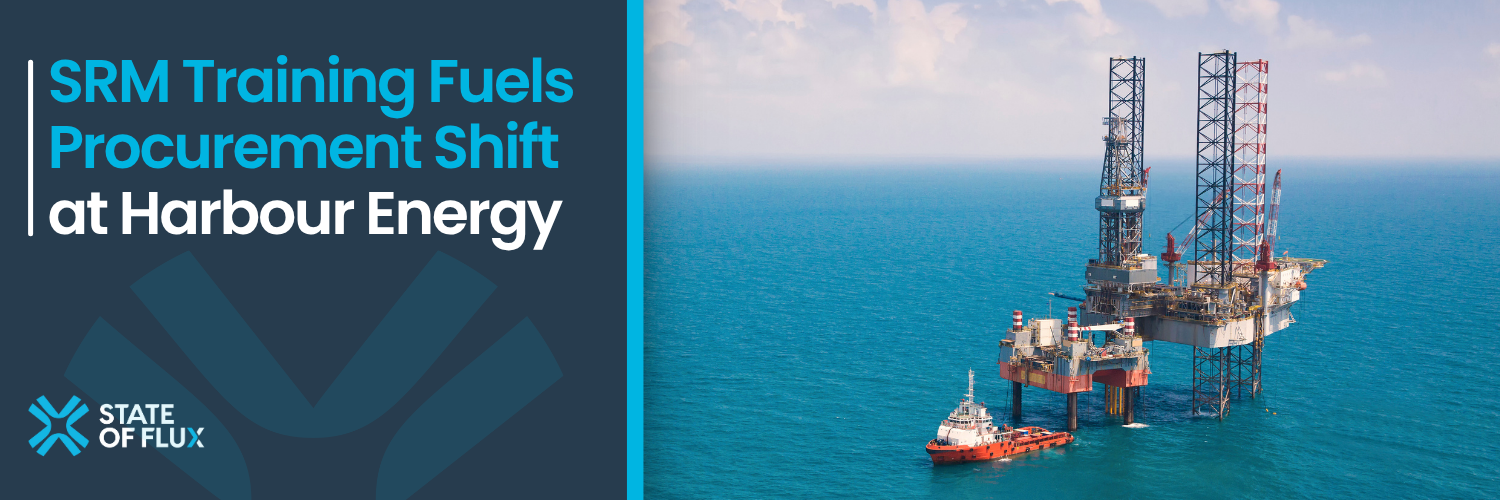
For Harbour Energy, supplier relationships sit at the heart of how the business operates. With over 70% of operations outsourced, these relationships carry not only risk, but huge potential for value, knowledge and innovation. The company saw a clear need to equip its people across Aberdeen, Jakarta and Ho Chi Minh City with the skills to manage suppliers more effectively and more consistently.
Their focus wasn’t on creating a policy to follow along with, but about building real capability. One that would allow teams to manage contracts with confidence, tap into supplier expertise, and strengthen critical partnerships over time.
A Practical, Relationship-Based Approach
Working with State of Flux, Harbour launched a capability programme focused on improving the way strategic suppliers were managed. This wasn’t off-the-shelf training. The structure combined workshops, live supplier work and tailored coaching. Participants applied what they learned to real relationships, with direct support and feedback along the way.
Rather than limit the content to oil and gas, the programme drew from SRM best practices across industries. This gave teams exposure to proven approaches that leading organisations use to strengthen governance, reduce risk, and improve supplier performance. It also helped reframe what ‘good’ supplier management looks like: broadening the mindset from firefighting and transactions to forward planning and partnership.
The curriculum covered the full lifecycle of a supplier relationship: performance and contract management, risk, governance, and relationship health. Alongside technical skills, it also focused on behaviour and how to influence without authority, manage stakeholders, and build trust across cultural and organisational lines.
One of the underlying goals was to bring consistency across regions and business units. While pockets of good practice already existed, there was no unified way of managing supplier relationships or tracking performance. This programme helped align expectations and gave people a shared language to talk about value, risk and delivery.
Even though the initial focus was on Tier 1 suppliers, the benefits filtered through to the broader supply base. Many of the same principles applied across categories and tiers, enabling better visibility, more structured engagement, and clearer decision-making throughout the organisation.
To support the capability work, Harbour also surveyed over 160 suppliers, capturing both data and qualitative insight into how the company was perceived. Interviews with key suppliers added further depth. These external perspectives helped reinforce the internal shift and gave Harbour a more honest view of its baseline. It also helped teams see where trust was strong and where it needed work.
A Foundation for Ongoing Value
More than anything, the programme helped build confidence. Contract managers, procurement leads and operational teams came away with clearer structures, sharper skills and a better understanding of how to work with suppliers day to day. That consistency across teams, countries and functions has started to influence how Harbour engages commercially, not only on cost but on delivery, innovation and shared goals.
The capability is now embedded and repeatable. And because it was built around live supplier relationships, the results have already started to show up in contracts, governance forums and team engagement.
Strengthen Your Own SRM Capability
If your organisation manages strategic suppliers, SRM Advanced can help build the commercial, behavioural and relationship skills needed to manage them effectively. We work with global teams to deliver practical, live programmes tailored to your business, your structure and your supplier base.